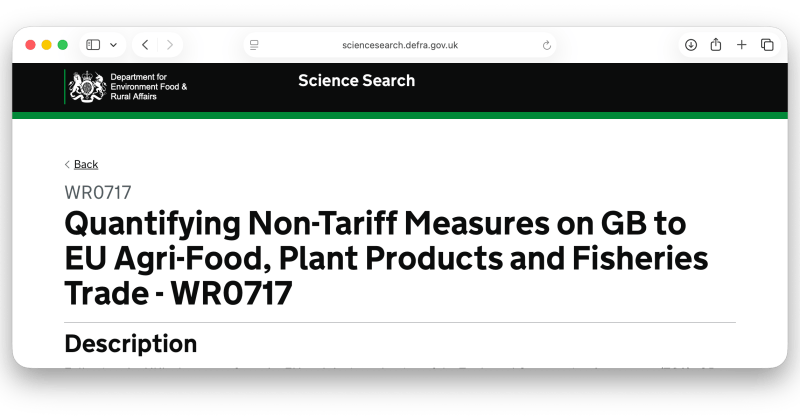
I would like to draw attention to a recent research project commissioned by the UK Department for Environment, Food and Rural Affairs (Defra) examining the impact of non-tariff measures (NTMs) on exports of agri-food, plant and fisheries products from Great Britain to the European Union. The project was led by colleagues at The Andersons Centre in collaboration with Trade Facilitation Consulting and builds on earlier pre-Brexit research undertaken for Defra examining the cost impacts of various EU exit scenarios.
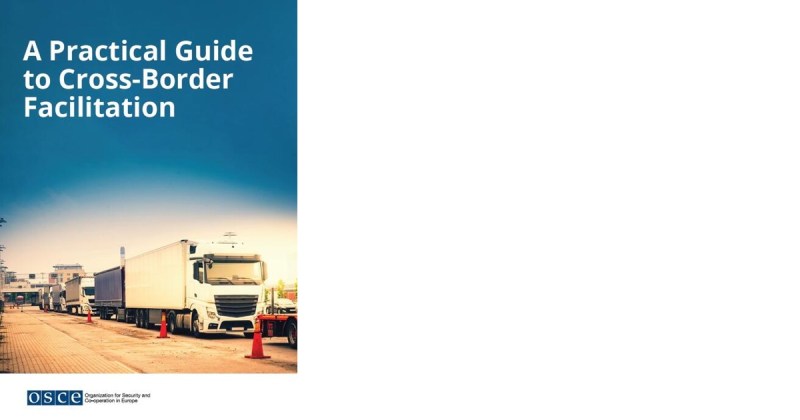
I am pleased to share a publication that I recently had the privilege of authoring for the Organization for Security and Co-operation in Europe (OSCE): A Practical Guide to Cross-Border Facilitation. The guide was commissioned by the OSCE Office of the Co-ordinator of Economic and Environmental Activities and is intended as a practical introduction for customs and other border officials, policymakers, practitioners, and private sector stakeholders working on trade and transport facilitation. I am very grateful to the team for involving me in this undertaking and hopeful that the publication will prove useful not only to those directly engaged in border management, but also to readers wishing to become more familiar with the broader field of cross-border facilitation.
It was once again a pleasure to have had a front row seat at the DHL GoTrade Summit and contribute expert commentary during the event’s interactive wrap-up sessions. The summit brought together leaders from across the public and private sectors to discuss the evolving landscape of global trade and supply chains.
The full summary report – produced with our help – has now been published and is available for download. It captures many of the key insights from the discussions and provides a useful overview of the challenges and opportunities currently shaping international trade.
This paper aims to help inform discussions about customs tariff classification and the use of assistive technologies, especially those found online. It offers a broad background overview of classification practices and requirements by reference to the WCO’s Harmonized System (HS), incurred challenges and costs, and the types of technologies deployed to assist users in their classification endeavours. Reviewed assistive technologies and solutions range from information tools that make it easier for users to find classification relevant information (such as rulings and guidance notes) to Artificial Intelligence (AI) approaches that aim to suggest the most appropriate codes – with varying levels of success. Suggestions with examples about how to evaluate assistive classification technologies are provided. And, it is argued that there is considerable potential for such technologies but, this inevitably depends on how well they can understand HS relevant characteristics, the quality of data that supports them, and how well they have been developed or trained. The prize includes better compliance outcomes and improved trade facilitation by reducing classification related costs. However, it is essential that policy makers and users understand the opportunities and limits of assistive classification technologies.
Acknowledgements: The author would like to thank Avalara Inc for their kind support and sponsorship. The work is that of the author alone.
Update: a peer reviewed version of this paper has been accepted for publication in the World Customs Journal. Please cite as:
Grainger, A. (2024). Customs Tariff Classification and the Use of Assistive Technologies. World Customs Journal, 18(1), 3–32. https://doi.org/10.55596/001c.116525
Disclaimer: The purpose of this paper is to help inform conversations about customs tariff classification practices with specific focus on supporting, assistive technologies. The author, Dr Andrew Grainger, has taken all reasonable care to make sure that the prepared content is accurate at the time of writing. However, it is important to stress that the subject matter is fast evolving and prone to change. No responsibility for loss or damage occasioned to any person acting, or refraining from action, because of the materials in this publication, can be accepted by Trade Facilitation Consulting Ltd or the author.
It was lovely to have had a front row seat at the GoTrade 2022 Summit and lend expert commentary during its interactive wrap-up sessions. The event was attended by leaders from across the public and private sector. The full summary report – produced with our help – has just been published and is ready for download. Noteworthy is that it also includes a long list of helpful recommendations and action points.
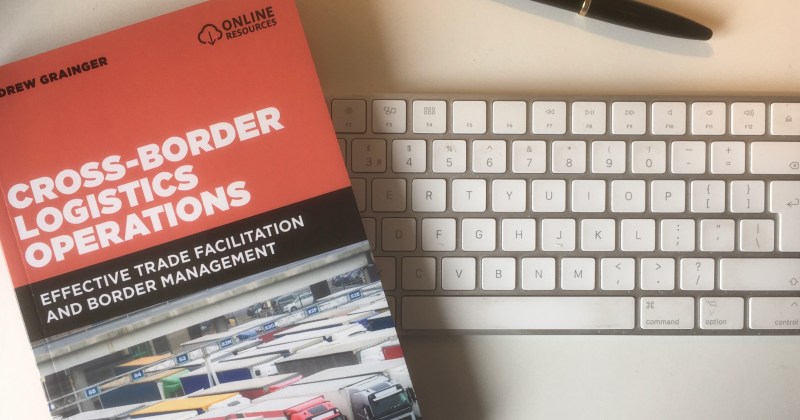
Reviews and endorsements are always humbling . I certainly was pleasantly surprised to see so many for my book when it was launched in August 2021 … and of course for Prof David Widdowson’s lovely foreword!
Wonderful to see, too, is that the book is being procured by libraries around the world, and that it is finding its way onto university reading lists. Educators can reach out to the publisher for an inspection copy. And if you want to own a copy – its not for students only! – the publisher is offering a 20% discount code (use the KOGANPAGE20 code at checkout). Amazon UK, at least for today, is bettering that discount (21% – no code needed)…. but as they say, it can be purchased at all other good bookshops, too!
I am very pleased to announce that on 3rd August 2021 Kogan Page will be launching my forthcoming book “Cross-border Logistics Operations, effective trade facilitation and border management”. This book has been a long time in the making and has received wonderful endorsements.
Advance orders with a 20% discount code (CROSSBORDER20) can be placed directly with the publisher at: https://www.koganpage.com/cblog. A sample chapter is available for free. Orders can also be placed at other major book retailers around the world.
On 25th January 2017 we proudly delivered a workshop at the European Parliament for members of its International Trade Committee (INTA). A recording of my presentation along with that of Dr Juha Hintsa can be accessed online at the European Parliament’s Media Centre.
Our subsequent report was published on the 25 July 2017 and is available for free download.
Citation: Grainger, A. (2015) “Customs issues falling under INTA’s new remit”, European Parliament, Directorate-General For External Policies, Policy Department, December, Brussels [doi:10.2861/519192(pdf); 10.2861/568334(paper)]
INTA is the European Parliament’s Committee on International Trade. The purpose of this commissioned study is to provide a concise account about the relation between European Union (EU) trade and customs policies with particular focus on the common external tariff and trade facilitation as well as the external aspects of customs provisions and management.